
vascular Services
Peripheral Arterial Disease Treatment
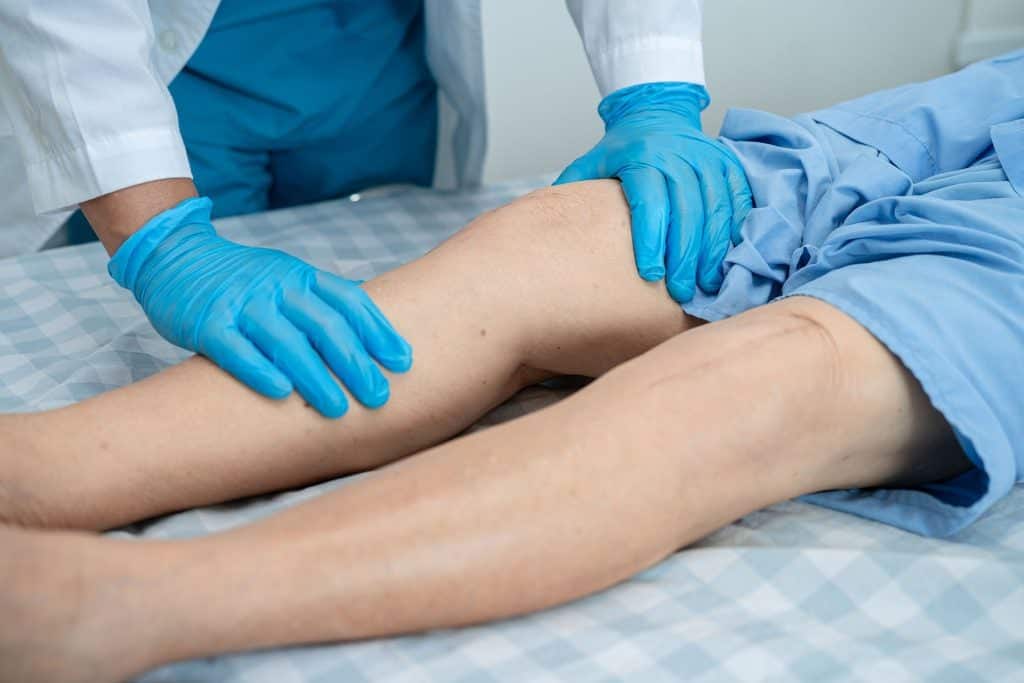
Peripheral Arterial Disease
Peripheral Arterial Disease Treatment
When the arteries in your legs narrow from plaque buildup, your muscles cannot get enough blood during activity. That is what causes the cramping, aching, or heaviness many people first notice when climbing stairs or walking a few blocks – symptoms that ease once they stop and rest. If that pattern sounds familiar, it is worth talking to a specialist. Richmond Heart and Vascular Associates evaluates and treats peripheral arterial disease for patients throughout Central Virginia, from a first diagnostic visit through long-term cardiovascular care.
Whether you have been referred for cardiac testing or are coming in with new symptoms, our board-certified cardiologists review every result personally and help you understand what they mean for your health.
More Than a Leg Problem
Peripheral arterial disease, or PAD, happens when plaque accumulates inside the arteries that carry blood from your heart to your legs and feet. Those arteries gradually narrow, and less blood reaches the muscles and tissue that need it during activity.
What makes PAD more than just a leg issue is that the same buildup process affects arteries throughout the body. People with PAD carry a meaningfully higher risk of heart attack and stroke, because arteries leading to the heart and brain often narrow at the same time. Finding PAD early protects your overall cardiovascular health, not just your legs.

Risk Factors
What Your Body Is Telling You
The most common early sign is leg cramping or heaviness during walking that fades within a few minutes of rest. Doctors call this claudication. It happens because narrowed arteries cannot deliver the extra blood muscles need when they are active.
As PAD progresses, symptoms can become harder to ignore:
Leg Pain
Pain in the leg or foot that lingers even while sitting or lying down, a sign of severe narrowing
Leg Numbness or Weakness
Numbness or weakness in one or both legs
Foot Coldness
One foot that feels noticeably colder than the other
Slow Healing
A wound or sore on the foot or lower leg that is not healing, because reduced circulation slows the body's repair process
Shiny or Discolored Skin
Skin on the lower leg that looks shiny or has changed color
Any of these symptoms alongside walking pain is a reason to get evaluated promptly.
Evaluation
How We Find Out What Is Happening
Your physician will begin by reviewing your symptoms and risk factors. Two tests then give a clear picture of circulation in your legs.
ABI
The ankle-brachial index, or ABI, compares blood pressure at the ankle to blood pressure at the arm. A noticeably lower reading at the ankle tells your doctor that blood is not moving through as freely as it should, which points to PAD.
Vascular Ultrasound
Vascular ultrasound uses sound waves to image the arteries and show exactly where narrowing is occurring.
Together, these tools allow your physician to make a confident diagnosis without any invasive procedure.
Treatment
How We Treat It
Treatment is matched to where you are in the disease and what your arteries actually need. Your physician will explain why a particular approach fits your situation.
Lifestyle Changes
A structured walking program is one of the most effective treatments for claudication, training muscles and blood vessels to work more efficiently over time. Quitting smoking, managing weight, and eating a heart-healthy diet all slow plaque progression and reduce cardiovascular risk.
Angioplasty
When an artery has narrowed significantly, a physician can guide a thin catheter to the site and use a small balloon to push the artery walls open from the inside. This restores blood flow without open surgery and is typically done as an outpatient procedure.
Medication
Antiplatelet medications reduce the risk of a clot forming in a narrowed artery. Statins lower cholesterol and help stabilize existing plaque. Blood pressure and diabetes medications are adjusted to prevent those conditions from accelerating artery damage.
Stenting
After angioplasty, a small mesh tube called a stent is sometimes placed inside the artery to hold it open long-term. Stenting is recommended when the narrowed segment is likely to close again without added support.
Accredited testing
Accredited Services, Reliable Results
Echocardiography Accreditation
IAC-accredited echocardiography imaging for precise evaluation of heart structure and function.
Nuclear Cardiology Accreditation
IAC-accredited nuclear stress testing and myocardial perfusion imaging.
Vascular Imaging Accreditation
IAC-accredited vascular ultrasound lab for arterial and venous studies.
Richmond Heart and Vascular Associates holds accreditation in echocardiography, nuclear cardiology, and vascular imaging. These accreditations are awarded by independent national organizations and are based on ongoing reviews of image quality, clinical performance, and safety standards. Every test is interpreted by one of our own board-certified cardiologists, not an outside reading service.
Why our patients choose us
Why Choose Richmond Heart and Vascular Associates
Do not put off getting evaluated if you are experiencing leg pain, persistent cramping, or wounds that are not healing. Schedule an appointment online or call Richmond Heart and Vascular Associates at (804) 800-6600. Our office is open Monday through Friday, 8:00am to 5:00pm.
Over 30 years of cardiovascular and vascular care serving Central Virginia
Physicians with RPVI vascular credentialing and board certification
ABI testing and vascular ultrasound available in-office for faster, more convenient diagnosis
Endovascular treatment and long-term cardiovascular management in one practice