

Vascular Services

Venous Disease

Female doctor examining a patient's lower leg during a clinical consultation for venous disease
Venous Disease

Venous Disease Treatment

If your legs feel heavy or tired by evening, ache after standing for a few hours, swell around the ankles, or show visible veins that bulge or throb under the skin, your body is signaling that the veins in your legs are not moving blood back to the heart the way they should. Richmond Heart and Vascular Associates provides evaluation and treatment for venous disease, with care plans tailored to your specific goals.

Why the Veins Stop Working Properly

Unlike arteries, which carry blood downward from the heart with the force of each heartbeat behind them, veins have to push blood upward against gravity. They do it with the help of tiny one-way valves that open to let blood move up, then close to stop it from sliding back down.

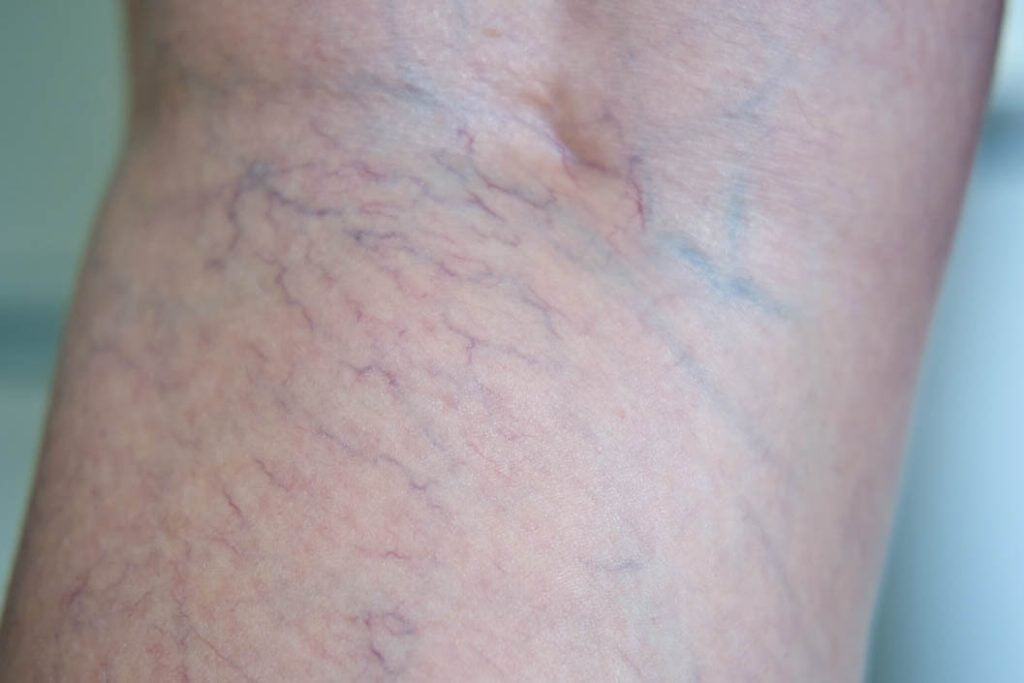
When those valves weaken or fail to close properly, blood starts to pool in the lower legs. The pooling raises pressure inside the veins, pushes fluid into surrounding tissue, and stretches the vein walls outward, creating the visible, bulging appearance of varicose veins and the persistent aching and swelling that follow.

When valve failure is ongoing, the condition is called chronic venous insufficiency. Left untreated, sustained pressure can damage the skin near the ankle, leading to discoloration, thickening, and eventually open sores called venous ulcers that are slow to close and prone to infection.

Close-up view of visible spider veins on a patient's leg related to venous disease
Symptoms

What Patients Feel and Why
Symptoms Worsen Through the Day

Venous disease symptoms follow a clear pattern. They tend to build through the day and ease after a night of rest, simply because lying down removes gravity from the equation.

Patients most often notice:

Leg Heaviness

A heavy, full, or tired feeling in the legs, especially in the afternoon or evening

Calf Issues

Aching, throbbing, or cramping in the calf or lower leg

Ankle Swelling

Swelling around the ankles that is worse by evening and better after sleeping

Discomfort Along Veins

Itching or burning along the course of a vein

Spider or Varicose Veins

Visible spider veins or bulging varicose veins

Thicker Issues around Ankle

Skin near the ankle that looks darker, feels thicker, or has broken down into an open wound

Risk

Why Seek Treatment for Venous Disease?

Persistent pressure inside the veins can be painful, and can damage surrounding tissue over time, eventually leading to venous ulcers – wounds that are notoriously difficult to close and highly susceptible to infection. Addressing venous disease before that progression occurs is far more effective than trying to reverse damage that has already happened.

Diagnosis

How We Evaluate It

Venous duplex ultrasound, the primary diagnostic tool for venous disease, is available at Richmond Heart and Vascular Associates. The test uses sound waves to map the veins and identify exactly where valves are failing. It is painless, requires no radiation, and gives your physician the information needed to build the right treatment plan.

Diagnosis

How We Treat It

Treatment is chosen based on what your ultrasound shows and how your symptoms are affecting daily life. Your physician will walk you through the reasoning behind any recommendation.

Compression Therapy

Medical-grade compression stockings apply graduated pressure from the ankle upward, helping move blood toward the heart and reducing pooling. They are usually the first step in managing venous insufficiency and are often paired with other treatments to sustain results.

Sclerotherapy

A solution is injected into the targeted vein, causing its wall to collapse and the vein to gradually fade as the body reabsorbs it. Sclerotherapy is effective for spider veins and smaller varicose veins and requires no downtime.

Thermal Ablation

For larger varicose veins or chronic venous insufficiency, a thin catheter delivers controlled heat directly inside the vein, sealing it shut. Blood reroutes naturally through healthier vessels. This minimally invasive procedure is done in-office and most patients return to normal activities quickly.

Accredited testing

Accredited Services, Reliable Results

Echocardiography Accreditation

IAC-accredited echocardiography imaging for precise evaluation of heart structure and function.
Nuclear Cardiology Accreditation

IAC-accredited nuclear stress testing and myocardial perfusion imaging.
Vascular Imaging Accreditation

IAC-accredited vascular ultrasound lab for arterial and venous studies.

Richmond Heart and Vascular Associates holds accreditation in echocardiography, nuclear cardiology, and vascular imaging. These accreditations are awarded by independent national organizations and are based on ongoing reviews of image quality, clinical performance, and safety standards. Every test is interpreted by one of our own board-certified cardiologists, not an outside reading service.

Why our patients choose us

Why Choose Richmond Heart and Vascular Associates

Leg symptoms that are interfering with daily life are worth evaluating. [Schedule an appointment online](#) or call Richmond Heart and Vascular Associates at 804.800.6600. Our office is open Monday through Friday, 8:00am to 5:00pm.

Over 30 years of cardiovascular and vascular care serving Central Virginia

Board-certified cardiologists with specialized vascular credentialing, including RPVI designation

In-office venous duplex ultrasound for accurate, convenient diagnosis

Minimally invasive treatment options with follow-up care at our Mechanicsville and Hopewell locations

Scroll to Top